
Montenegro and Europe: From arts to politics and back
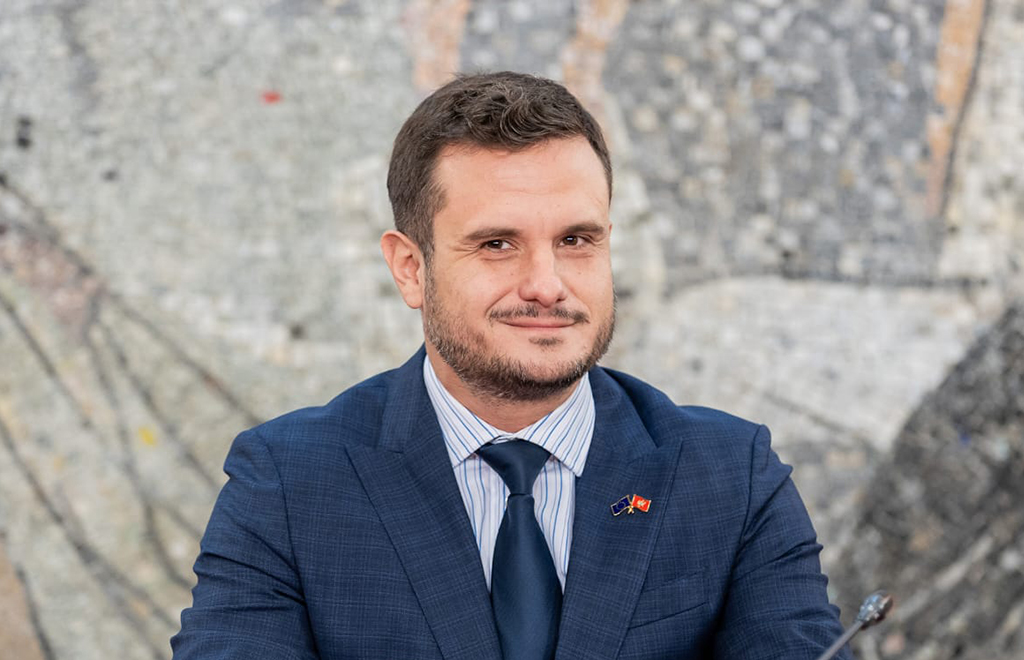
Assoc. Dr. Predrag Zenović (born 1986, Montenegro) is a distinguished political scientist, academic, and senior public official currently serving as the Chief Negotiator of Montenegro with the European Union, a position he was appointed to by the Government of Montenegro on 29 December 2023. In this capacity, Dr. Zenović leads Montenegro’s EU accession negotiations, co-ordinating expert and political efforts to advance alignment with European standards and reforms. Dr. Zenović’s academic career is rooted in political theory, European integration, and normative political analysis. As an academic author, Dr. Zenović has published two books and is the author of more than thirty scholarly articles in national and international journals, covering topics such as citizenship, constitutionalism, European studies, identity, and gender studies.
Regarding dynamics between politics and arts, I remember when I was working on the project of the European Capital of Culture in Montenegro, we tried to make the cultural scene not overly ‘festivalised’. According to me, ‘festivalisation’ is one of the problematic elements for the development of culture in certain areas. Festivals come and go. The intrinsic cultural incentive doesn’t stay. However, if the festival is conceived in a proper way – like Festival Theatre City in Budva – it can contribute to necessary changes lasting longer than its annual 10, 30 or 60 days. Since its creation, I have attended around 20 editions of Festival Theatre City and seen many amazing theatre shows that have shaped my experience and my perspective of what politics and theatre are.
The European Union (EU) is driven by its own internal logic. In my view, this runs counter to what is generally observed. In many nation states or in the US federal states, the territorial entity and its policies are structured around a huge idea. By contrast, the EU has developed slowly and organically in order to determine the areas in which it needed to evolve and find a common language, thereby enabling it to grow and become stronger. In this regard, the EU pays close attention to the cultural sphere. It does not dictate how cultural policies should be implemented, but provides overarching stimulus to the independent cultural sector so that all local voices can be heard and no one is excluded, thanks to deeply participatory and democratic processes.
Jean Monnet, allegedly, once said: “If I could start from the beginning, I would start from culture because culture unites and the diversity is something which we highly value” (we are not entirely sure whether these were his own words or those of someone else). If you look at the history of Western civilisation and European values, you will see that philosophy, theatre, dialogue and democracy were born at the same moment, around the 5th century BCE. Theatre itself – with the actors on scene and spectators around – is a highly political form. Also the way the European Festivals Association (EFA) is organised, with all these festivals becoming part of a huge project, is deeply political. The presence of so many participants from the EU member States and others, as well as other continents, in Montenegro at EFA’s Arts Festivals Summit sends the strong message that Montenegro and other countries from the Western Balkans belong to Europe, despite all disturbances and political destiny from previous eras.
There are three encounters from the first decade of the nineteenth century that marked not only European history, but also Europe’s self-understanding. In 1804, Beethoven broke with Napoleon. He had initially seen him as the embodiment of the ideals of the French Revolution and dedicated his Third Symphony, the Eroica, to him. But when Napoleon crowned himself Emperor, Beethoven famously tore up the dedication, refusing to accept the transformation of a liberator into a ruler. In 1806, Hegel saw Napoleon entering Jena and was deeply impressed, describing him as “the world spirit on horseback.” For Hegel, Napoleon was not merely a political leader but the embodiment of history itself in motion. Then, in 1808, Napoleon met Goethe at Erfurt. Napoleon greatly admired Goethe and reportedly carried The Sorrows of Young Werther with him during his campaigns. During their conversation, he asked Goethe which parts of the novel were true and which were fictionalised, and their discussion turned to destiny, history, and politics. Napoleon allegedly remarked that politics is our destiny, and our destiny is political. I think he was absolutely right.
Today, Montenegro is very focused on achieving its goal of becoming a member of the European Union by 2028, and the Budva Summit is an opportunity to send and amplify this message to the wider European public. At a moment of growing geopolitical tensions and wars around the world, there should be a clear voice based on the values of human dignity, plurality, democracy, freedom, and the rule of law – the very values for which the European Union stands. The European Union was never conceived as a final or closed, holistic project. It has always remained open to development, enlargement, self-correction, and critical balancing within itself. This openness to renewal is precisely what makes the European Union such a unique political project. And it is exactly this Europe that Montenegro seeks to join and help shape.
The independent scene and festivals can bring a critical dimension that can make cities move in a certain way by challenging the truths, injustices, and inconsistencies of the contemporary era. Unfortunately, things have moved without huge success in Budva’s urban development. Budva is today overly urbanised. The art will not save the world, but 40 years of Festival Theatre City has contributed to another sort of reflection: Where should Festival Theatre City go in the next few years? What do we want from our city and our country? Which role can arts and culture play here? These are important questions to ask ourselves.
Danilo Kiš remains one of the most important writers from our region, whose works have been translated into virtually all European languages. His poetics – or perhaps better, his po-ethics – were always deeply ethical and political. Through novels such as A Tomb for Boris Davidovich and Early Sorrows, Garden, Ashes, he confronted some of the darkest experiences of the twentieth century, particularly the Shoah, while also reflecting on the political and ideological dead-ends of modernity. He was equally critical of totalitarian temptations in politics and dogmatism in art, on the left and on the right side of the spectrum.
Kiš believed that literature was not an escape from reality but a way of intervening in it. He understood that books alone cannot change the world, but they can change the way we see it. They can influence decision-makers, shape public consciousness, and perhaps even change people themselves. At the very least, they can challenge complacency and provoke reflection.
The same is true of theatre. Since its birth in democratic Athens in the fifth century BCE, theatre has been a space of dialogue, critique, and public self-examination. It allows us to address questions that are often difficult, uncomfortable, or even forbidden to discuss elsewhere. Theatre emerged alongside democracy because both depend on the same principles: openness, plurality, argument, and the willingness to confront ourselves. Democracy gives citizens a voice; theatre teaches them how to listen, to question, and to imagine another perspective.
This is why theatre remains profoundly political – not because it serves a political agenda, but because it creates a space where society can reflect on itself, challenge its assumptions, and envision alternative futures. Our destiny is political so that’s why theatre must be political and deeply philosophical, maybe sometimes introspective also. Theatre needs to target the questions and dilemmas of today, not especially in a way which is corresponding to official truths, to give a sort of a political perspective.
I think politicians appreciate culture and the arts, especially when they can make use of them. Everyone understands the importance of culture in the socialisation of young people, in conveying important messages, in enriching our minds, and in promoting values. New decision-makers are shaped by culture, and they will be more inclined to understand its importance. When I spoke to politicians about culture, it was always important to find common ground, to present arguments such as its use in a campaign, while ensuring that the idea, project or product remains your own and stays true to the message you want to convey. The arts can still be deeply subversive – festivals always occupy that critical space that politicians cannot fully control – but you must adapt your approach so as to provide a political advantage to decision-makers.
There is a great deal of enthusiasm across all our countries – from Bosnia and Herzegovina to Albania, from Macedonia to Montenegro – at the prospect of taking part in this immense project that is the European Union. Whenever I speak with my colleagues in Kyiv, Ukraine – and we always discuss highly technical matters such as the harmonisation of legislation, the institutions required to implement EU policies, and so on – I am surprised by their enthusiasm and dedication to their work, even as bombs are literally falling on their heads. Europe is always present somewhere, just as in the myth of Europa, who was abducted and taken elsewhere. I believe that Montenegro can bring to Europe this beauty of diversity, this ability to forge a consensus amongst numerous national, ethnic, religious and linguistic groups, drawing on a history of millennia-old civilisations. Budva lies at the crossroads of three great civilisations that have shaped European history and culture.
At a time when Euro-Atlantic dynamics are changing and new geopolitical paradigms are emerging, one question remains profoundly European: who will be the voice of the Other? Who will defend human dignity, plurality, freedom, and human rights in a world increasingly tempted by simplification, exclusion, and force?
I strongly believe it will be Europe.
Perhaps this is why theatre was born together with democracy in Athens. Democracy gave citizens the right to speak; theatre taught them how to listen to another voice. On the Athenian stage, the stranger, the defeated, the dissident, and the tragic hero all received a voice. Theatre taught Europe that there is always another perspective, another truth, another human being standing before us.
In this sense, Europe itself is a theatrical idea. Not a monologue, but a dialogue. Not unanimity, but plurality. Not the triumph of a single voice, but the coexistence of many voices within a common space.
This is why enlargement matters. It is not merely a geopolitical process. It is the expansion of a political and cultural space where difference is not feared but recognised, where dignity is not negotiable, and where criticism is understood as a form of loyalty rather than hostility. Europe was never conceived as a finished project. Like democracy, like theatre, it remains permanently open – open to self-reflection, self-correction, and renewal. And perhaps this is its greatest strength: the capacity to question itself without ceasing to believe in itself.
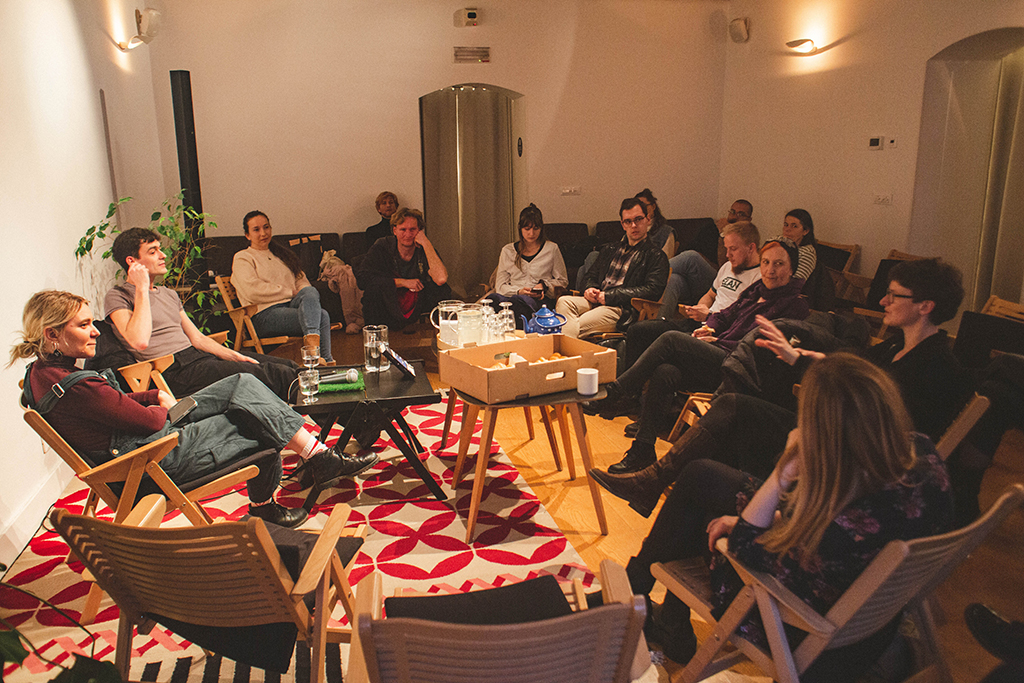
This text is based on the opening keynote conversation with Predrag Zenović and Boris Liješević at the European Festivals Association’s Arts Festivals Summit on 17 May 2026 in Budva, Montenegro, hosted by Theatre City Budva.
Festival Life creates shared moments of audiences and artists, eye-to-eye