
Cinema, identity, and the struggle for shared human values
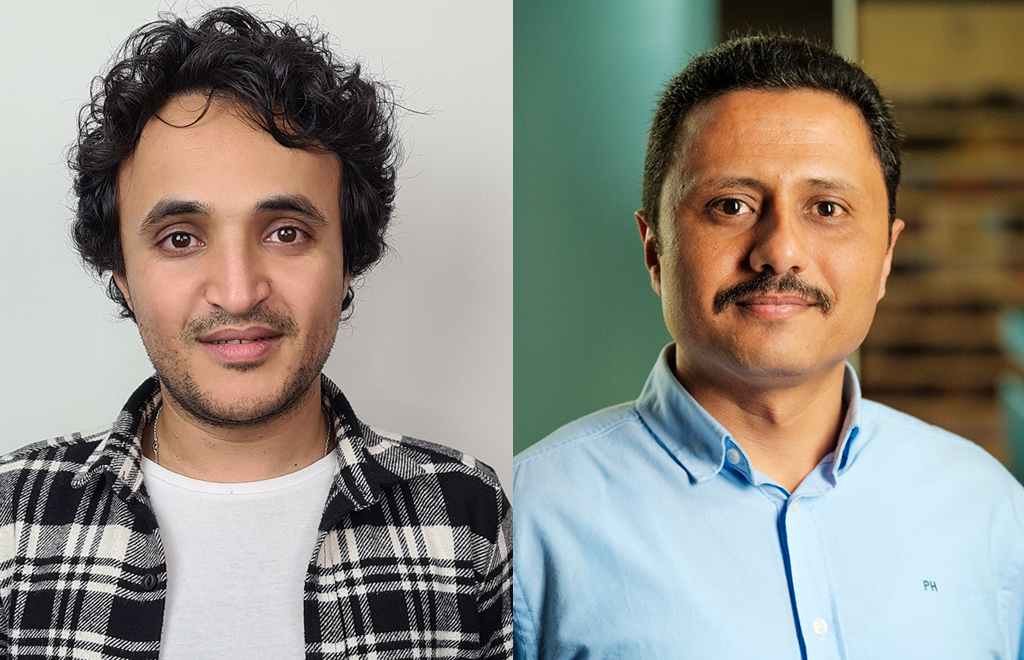
Abduljabbar Alsuhili is a journalist, actor, and cultural practitioner based in Sweden. He works with the Arabic editorial team at Swedish Radio, where he covers issues related to migration, culture, social change, and public affairs. Alongside his work in journalism, he has been engaged in cultural initiatives and artistic projects that explore questions of identity, belonging, and intercultural dialogue. His interests focus on the intersections of media, culture, migration, and democratic values, with a particular emphasis on how narratives shape public perceptions of Arab communities in Europe.
Mohammed Almahfali began his career as a researcher in Arabic literature, developing a body of work that explores the intersections between culture, politics and social change. His academic path took shape in Yemen, where he taught literature and discourse analysis before moving to Sweden, a transition that expanded his engagement with interdisciplinary approaches to the contemporary Arab world. Over the years, he has published studies on rhetoric, cultural production and human rights, and contributed to research projects that examine how narratives shape public understanding of the region.
As global political and economic crises intensify, radical solutions emerge, driven by the rhetoric of populist right‑wing movements in both their religious and nationalist forms. Europe has witnessed a rapid rise in this trend, which has reshaped political discourse on migration, identity, and culture. Right‑wing nationalist and populist parties now participate in government or exert strong influence on political agendas in countries such as Sweden, Italy, Hungary, the Netherlands, and France, accompanied by a growing narrative that questions the value of cultural pluralism and promotes the idea of defending national identity against the migrant “other.”
In this climate, conspiracy-based theories such as the “Great Replacement” have gained increasing visibility in public debate, portraying migrants, especially those from Arab and Muslim majority countries, as a demographic and cultural threat to Europe’s future. This discourse has also affected the cultural sphere. Activities historically considered part of the symbolic infrastructure of European democracy, such as film festivals, cinemas, theatres, and cultural centres, have become targets of suspicion or hostility when they host migrant or Arabic cultural expression.
Within such a context, multiculturalism, long one of the pillars of the European democratic imagination, appears to be under pressure. On one side stands a political and popular discourse that leans toward closure and monolithic identities. On the other side stand cross‑border cultural practices that continue to defend practices for encounter, dialogue, and the reimagining of shared life.
One of the central problems lies in the way far-right discourse in Europe reframes the concept of Arabic culture. Instead of viewing culture as a broad space that includes literature, cinema, music, theatre and visual arts, it is reduced to religious practices or social customs that are presented as a fixed essence that cannot change. This reduction produces a simplified cultural image used to justify fear and rejection, while the larger body of Arabic cultural production that defends values of equality, pluralism and human rights is pushed aside. The paradox is that these same cultural industries, such as cinema, music, and theatre, face another kind of threat in the Arab world, including censorship and political and religious pressure because of their boldness in criticising authority or addressing issues related to gender and individual freedoms. In this sense, the European far right finds itself in the same position as religious and political extremism in the Arab world. Both oppose cultural production that expands the horizon of freedom, embraces diversity and challenges closed narratives about identity.
The Malmö Arab Film Festival is one of the most important windows through which Arabic cultural production reaches European audiences. It presents this production as a living human expression of a society that carries its hopes and pains, its joys and sorrows, and its contradictions and questions. The festival, as its director, Mouhamad Keblawi, emphasises, works to build a narrative that restores the human being to the centre of the image and reveals the details of everyday life that remain hidden behind political and media discourse. In this space, stereotypical images are challenged by showing how a person lives love and loss, faces social and political constraints, and searches for meaning in life like anyone else. Through this narrative approach, the festival becomes a cultural project that allows European audiences to see Arab society in its diversity and richness and to approach its human experiences.
Josef Kullengård, Head of Industry at Göteborg Film Festival, describes his experience with the Malmö Arab Film Festival as a revelation of an essential truth. What is commonly referred to as “Arab culture” is not a single entity or a fixed form. It is a wide network of cultures, languages and experiences that stretches from Mauritania to Oman and carries within it a broad human, intellectual and aesthetic diversity. The common reduction of Arabic culture to one image hides a vast richness that becomes visible only through direct engagement with artistic works. Josef explains that the festival made this diversity clear to him. He encountered multiple voices, different narrative forms and aesthetics ranging from humour to tenderness to resistance, along with a strong presence of Arab women directors whose work combined artistic strength with social boldness. Through this discovery, it becomes evident that Arabic cinema affirms the diversity of Arab societies and breaks the idea that Arabic culture is a single block or a closed identity. It appears instead as a wide extension of varied human experiences that cross political and geographical boundaries.
Although cultural festivals often find themselves drawn into political or ideological disputes, the function of art is not confrontation or participation in identity battles. Its purpose is to expand human horizons and deepen the capacity for understanding and empathy. Artistic work does not flourish in moments of conflict, nor does it benefit from being summoned as a party in political struggles, because its core values are freedom, imagination and openness. This is why Mouhamad Keblawi emphasises that the festival remains committed to the values of dialogue, respect and freedom of expression, and rejects turning the cultural space into a site of confrontation. Artistic festivals create shared human intersections that political groups themselves can use to strengthen values of equality and public freedoms instead of treating them with suspicion or hostility. Ylva Skarsgård, Festival Director of Nordisk Panorama Film Festival and a regular audience member at the Malmö Arab Film Festival, captures the urgency of these spaces with particular clarity: “We are living in very scary times in Sweden, with politics that aim to exclude and divide people in the society. All spaces and places where we can meet, exchange experiences, expand our horizon are valuable.”
Building on this role of art in opening spaces for dialogue and expanding the horizon of shared understanding, artistic and cultural projects are able, to some extent, to create a real shift in how European audiences view the Arab world. The films shown at the Malmö Arab Film Festival reveal complex everyday lives, shared human experiences and a social and cultural diversity that goes far beyond the stereotypes reinforced by the media. Lennart Ström, award-winning documentary producer and member of the European Film Academy, explains that what he saw during the festival days moves past abstract discussions and draws the viewer into the details of family life, social classes, laughter, disappointments and everything that makes a person human. Annika Gustafsson, a veteran film journalist and former jury member at MAFF who spent over three decades at Sydsvenskan, adds that the films allowed her to develop a clearer sense of intimate, social and political life in Arab societies, which made broad generalisations much harder to accept.
Yet this partial success in challenging stereotypes does not eliminate a persistent problem related to the ability of these works to reinforce shared human values and broader democratic principles. Films can open a window onto human experience, but they cannot on their own change political structures or the narratives that reproduce fear of the other. A part of this cinematic production also faces restrictions in the Arab world, as Annika observed when she noted the absence of topics such as political violence or capital punishment due to censorship. This means that festivals operate within complex limits. They challenge stereotypes at the European level, yet at the same time they reveal the fragility of the cultural sphere in the Arab context and show that the democratic values carried by these films are not always the product of a supportive environment but sometimes the result of resistance.
Defending freedom of expression in Europe is inseparable from defending it in the Arab world, and celebrating diversity here is incomplete without recognising the need to expand its space there. In this sense, cultural festivals become bridges that move in both directions. They challenge prejudice in Europe while also supporting the possibility of building a more open and free cultural sphere in the Arab region. This work is grounded in the belief that democratic values are universal human values that cannot be reduced, excluded or fragmented.
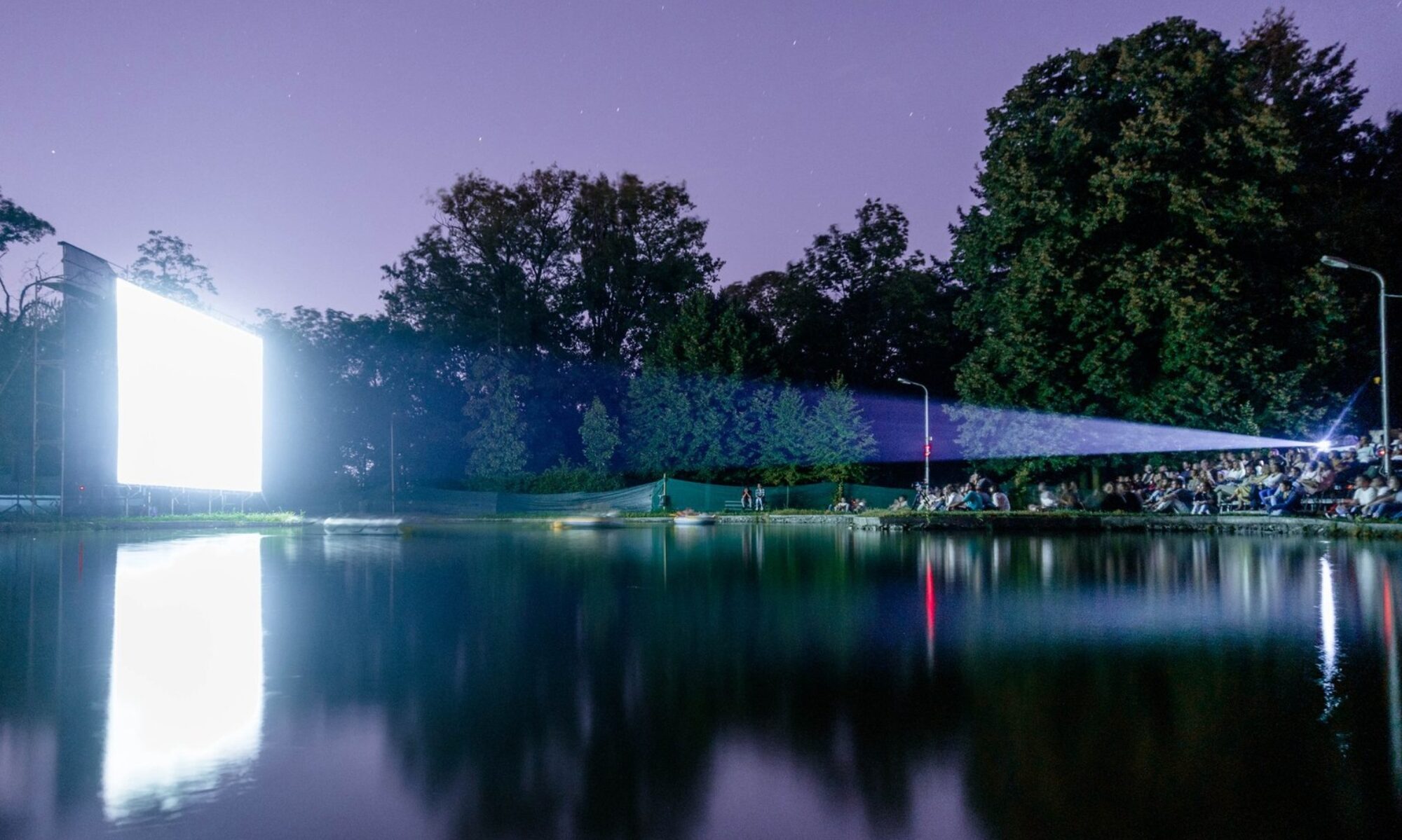
Festival Life creates shared moments of audiences and artists, eye-to-eye