
Repairing the past in the Western Balkans through theatre
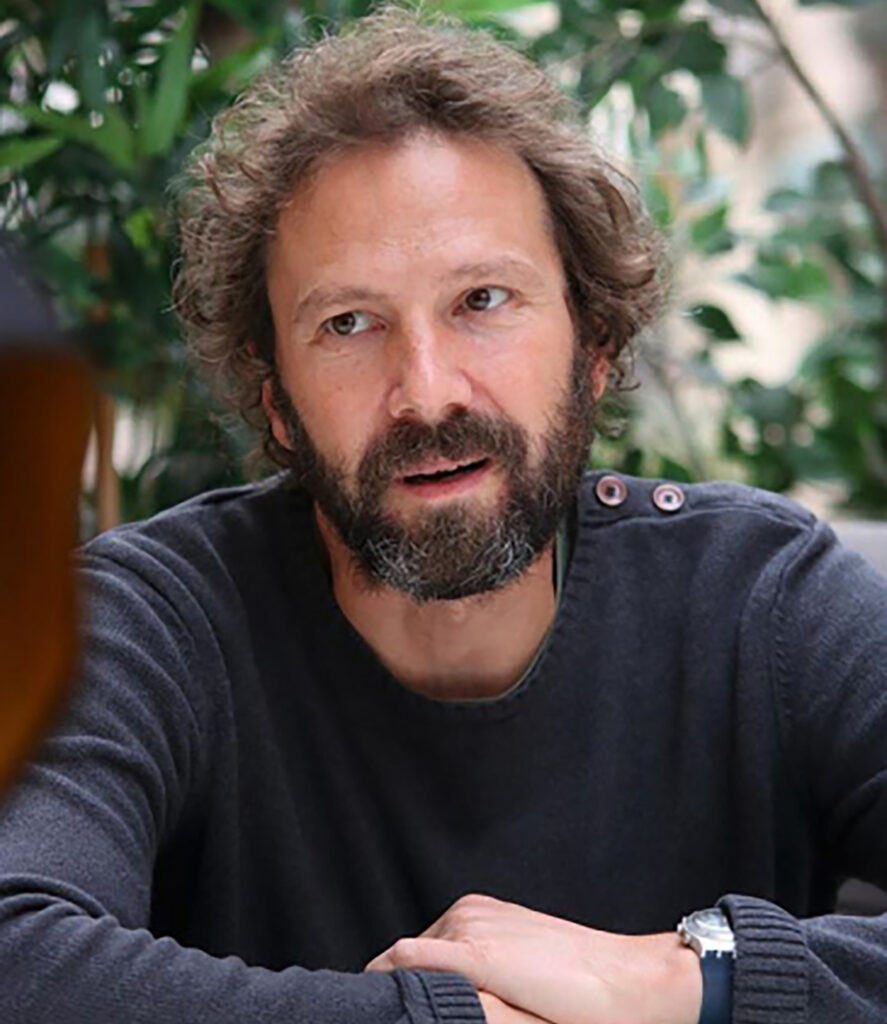
Boris Liješević is a theatre director and lives and works today between Belgrade, Novi Sad and Budva. He was born in 1976 in Belgrade and grew up in Budva. He graduated from the Department of Serbian Literature and Language at the Faculty of Philosophy in Novi Sad. In 2004, he graduated from the Directing Department at the Academy of Arts in Novi Sad, where he still teaches acting as an associate professor. He was a triple scholarship holder of the Goethe Institute in Belgrade.
He is an associate of the Zagreb Acting Studio, where he teaches the Strasberg Method. In his directing work, he has worked with different titles, authors and directions.
A significant part of his work is dedicated to documentary theatre, where authorial projects are created by recording topical conversations with selected anonymous interlocutors who reveal their authentic experiences.
A large and growing part of his director’s oeuvre consists of plays based on dramatisations of the novels and his work he has been awarded many national and regional awards.
I’m very glad that the Arts Festivals Summit of the European Festivals Association happens in Budva this year. In 2026, Budva celebrates the 40th edition of Festival Theatre City. I remember each edition of the festival. My mother, Branislava Liješević, was the director of Festival Theatre City from 1990 to 2000. As a child, I watched many performances, I met many actors, directors, and I wished to be part of them.
Today, I am a theatre director, and the questions that have led me to rethink my role and responsibilities as a theatre artist concern expectations: Who is an artist today? What is the artist’s work and which tasks does it entail? What are the artist’s goals? Should an artist follow his or her artistic visions and make magnificent images on stage like directors such as Robert Wilson, Romeo Castelluci, Franck Castorf do? Or should an artist correlate with real life to question reality critically and repair it like Milo Rau or Haris Pasović? These are two different styles and experiences. There isn’t a single answer. The answer is in the artist’s personality and point of view.
The story of my country and my region had a big impact on my development. I was 13 when the war in Yugoslavia started. I was 16 when my brother was mobilised and sent to war. I was 17 when our parents had monthly income ranging from 5 to 10 Deutschmarks (between 2,50 and 5 Euros). I was 22 when our country was bombed. My experience shaped my theatre to be more political.
If I want to be a director who transforms his own life, experience and emotions into theatre, then I wonder if I should choose between artistic visions or considering the reality of the contemporary world. For me, artistic vision is deeply rooted in the present moment. Whatever I do, I do it because of the present moment, and reality is always the reason for my artistic decisions. For example, if I decide to adapt a text from the past, I do it because I think it’s important nowadays, because it speaks about us and the world we live in.
Theatre performance is a public act. It is an opportunity to communicate with the audience, to say something important, something repairable, to send some message. The message is the reason why I am doing something and not something else. Although we know that our message will not change the world, save the planet, bring justice, democracy, elections, nothing, I still take this as a mission. This is my attitude but I don’t like it when someone says that an artist has tasks or a specific role to play. For me, an artist has no tasks; an artist is a free person. The artist’s only task is to be good, to produce good work, to meet oneself and discover who he or she is.
Artists from the Western Balkans have a different vision. A few years ago, I watched the performance The Son by Florian Zeller with some friends who are philosophers, novelists, etc. The son is divided between his mother and father who are divorced. In the basement of his father’s house, there is a rifle that the young boy will use to commit suicide. The writer doesn’t give any explanation about the rifle, it’s not important for him. On the way out, my friends wondered how this French author can talk about a rifle without specifying who it belongs to. Balkan writers would have written about the rifle. It would have had a full biography; the rifle was used in some war, belonged to some ancestor, killed some people. The rifle would have became the main actor in the Balkans.
I think every artist from Eastern Europe, from the Balkans, from Yugoslavia, born in the second half of the 20th century and who lived through wars, crisis and revolutions has something in common: the need to repair one’s life and memories, to repair the past. We are trying to fix old traumas and it’s typical for many artists from this part of the world. Artistic work is similar to a form of struggle: a fight against what is happening in the world in the hope of a better future. It is, in a way, an artistic obsession – which isn’t necessarily a good thing – but it is part of our personal journeys. It is our way of thinking, of creating, of understanding art and of expressing ourselves through it.
My pieces are performed in theatres across the region in Serbia, Montenegro, Slovenia, Croatia, Macedonia, Bosnia and Herzegovina and also in Hungary and Romania. 10 years ago, I was disappointed not to be invited in German or Austrian theatres to direct there. Only two directors from my generation were invited in Western European countries: Oliver Frljic and Miloš Lolić. I was frustrated because I thought I wasn’t talented or good enough. Today, I still have a bit of this bitter feeling, but I also think that it’s not the only reason. There is some kind of wall on our borders. I realised that I could be satisfied with my work being shown in these countries. I try to give my best in these circumstances and opportunities, and to feel good. I hope though that the next generations will have more opportunities to perform and direct in Western Europe.
There’s one essay, Homo poeticus, by Danilo Kiš that speaks about the position of Eastern European artists and writers. Kiš writes: “We are exoticism. We are political scandal. We are also beautiful sunsets on the Adriatic coast, gentle tourist memories of Syrian Adriatic evenings, memories soaked in slivovitz. And that is all. We are hardly even considered part of European culture. Politics, yes. Tourism, certainly. Slivovitz, of course. But who the hell would look for literature in such a country? And who could possibly make sense of all those nationalist absurdities; all those languages and dialects so close and yet so different they say all, those religions and regions…. Let them mock their politicians and their system. Let them describe some political scandal, set within the charming, exotic backdrop, and there you have good literature and we – Europeans, we – civilised people, we shall describe with clear consciousness and pure hearts the beauty of sunsets and the exoticism of our childhood and our youth like Saint-John Perse. We shall write love poems and all sorts of other things, while they – poor fellows – can busy themselves with their political, exotic communist problems”.
According to me, we – the artists from the Western Balkans – can bring to the European Union our culture, our authenticity, our topics which are quite different from those of other regions of the world. We can bring our stories, that are unique, of young guys who set off to become sailors and end up as drug dealers; stories of young people who dream about careers but finish as killers or mafiosi. We can bring our national tragedy and our grievances. That is what is most distinctive and, I believe, most important for culture.
This text is based on the opening keynote conversation with Boris Liješević and Predrag Zenović at the European Festivals Association’s Arts Festivals Summit on 17 May 2026 in Budva, Montenegro, hosted by Theatre City Budva.
Festival Life creates shared moments of audiences and artists, eye-to-eye