
Observations, questions and thoughts ‘About Europe’
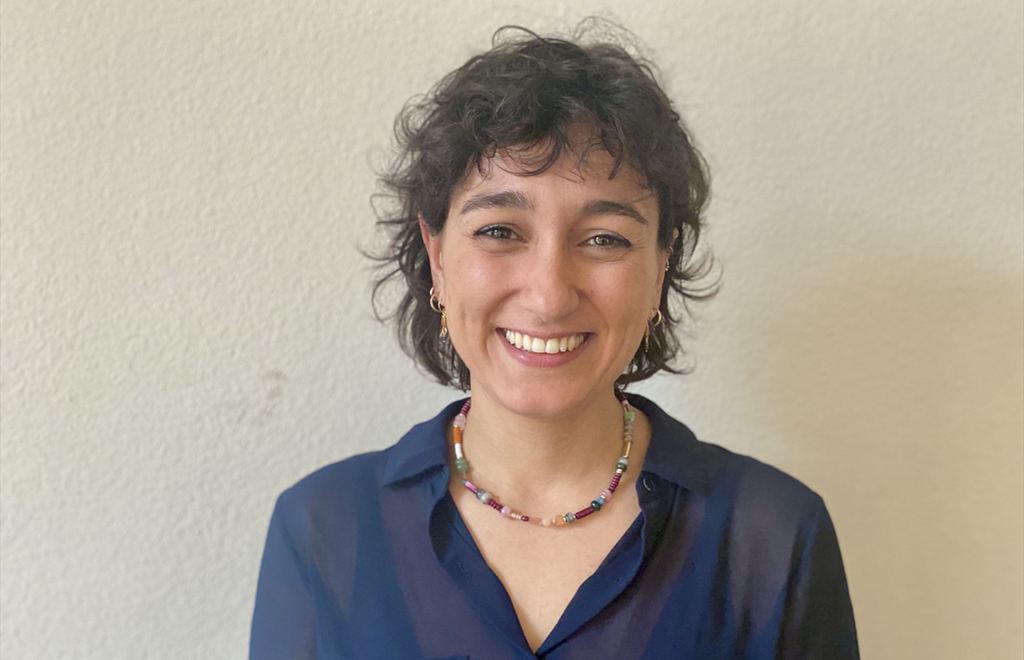
Ana Benavides Otero is a Brussels-based cultural professional currently working as EU Projects and Policy Manager at the European Festivals Association (EFA). She has a Bachelor’s degree in Modern Languages, Culture, and Communication, as well as an Erasmus Mundus Master of Arts in Euroculture: Society, Politics, and Culture in a Global Context. Throughout her studies and career, she has participated actively in various international projects. At EFA, Ana focuses in particular on the Arts and Politics and Arts and Well-being initiatives, co-ordinating the EFFE Seal for Festival Cities and Regions, Take5* and contributing to the CARE – Culture for Mental Health project, among others. She also manages EFA’s relations and projects with the EU and with colleague initiatives. Ana is a member of the Strategy Group of ‘A Soul for Europe’. She believes in the power of the arts to shape more caring and connected societies by bringing people together, encouraging dialogue and understanding of one another.
What can arts and politics do together? Where does Europe live, and where is Europe felt? Can we bridge the local and the European levels through arts and politics dialogue? What is the role of networks? And how can we reach citizens who do not often feel Europe in their daily lives? How can we rebuild trust in politicians, and how can politicians help civil society rebuild that trust? How can we all – artists, festival makers, cultural professionals, and politicians from local to European level – have a horizontal conversation? Can we create a symphony with those thoughts and ideas? How could this symphony be translated into policies? And can policies then offer opportunities for more symphonies to be composed? How can we bring artists and politics to the human level and bridge the distance that different kinds of intellectuality create?
These questions are a mix of those I have heard recently that resonate with me; questions that have raised from other questions, that become calls for action, questions from the grassroots and questions we need to keep asking ourselves and to which we need to try together to find answers. Answers do not need to be uniform. They can be many – different ones invoke different actions and movement. These days we hear about fear, despair, apathy, lose of hope; but we also hear that the arts can bring back the joy of life, the drive to take action, and the capacity to dream of better futures. Yet, as Elena Polivtseva (Researcher & Co-founder of Culture Policy Room) warns in one of her last articles “culture is increasingly tasked with stabilising, preserving, and reassuring, as if the horizon were something to protect ourselves from rather than to move toward. This defensive framing of culture’s role is, in many ways, the clearest manifestation of Europe’s struggle with what historian Timothy Snyder calls ‘positive freedom’: a vision of not only what Europe wants to be free from, but what it wants to be free to become. When culture is reduced to a tool of cohesion and protection, its imaginative capacity is sidelined – and with it, societies’ ability to desire, to propose, and to project a future that is more than a guarded extension of the present.”
For the arts to help us imagine better futures for our societies – and for Europe – artists and cultural practitioners need conditions that allow them to thrive, not merely survive. And something that has been made clear is that the arts cannot do it alone. As Pawel Potoroczyn (CEO Lublin 2029) argues, “If Europe wants to remain a space of freedom, responsibility, and reason, culture cannot remain peripheral. It must be treated as infrastructure. Not later. Not symbolically. Now.”
When supported and empowered, festivals can be such an infrastructure; diverse ecosystems where people who share the same spaces, but not always the same background or views, encounter each other. I heard someone recently say that “the city is the extension of my home” – a reminder that how we care for a private space can shape how we care for a shared one. Yet care is not automatic; it requires attention, and at times effort, especially when we meet those who are not like-minded. In that sense, festivals can also function as laboratories of togetherness, testing ways of living together locally while opening questions that scale up to Europe: what do we want in our daily lives that Europe could help make possible, and what is our responsibility for building it? Or, in other words, as Mahir Namur, Cultural Manager and Psychological Counselor, questioned and reminded us in a recent keynote speech at the Jean Monnet House: “What responsibility do we carry, as Europeans, for making the world more livable? How fortunate we are to still live in a context where that responsibility can actually be exercised – where freedoms exist, where individuals and institutions are still able to shape the system. Freedom, by its nature, makes responsibility inevitable. Perhaps the belonging we need to discuss is not belonging to Europe as such – but belonging to the European ideal. Not to the reality that already exists, but to the possibility of what could exist.”
But again, festivals cannot do it alone, they need their communities and their politicians, and for dialogue to happen we need vehicles and platforms. In this context, the European Festivals Association (EFA), offers an attempt to drive such a vehicle between arts and politics, festivals and their audiences, artists and their local authorities: ‘About Europe’. It is an initiative, a call for complicity between arts and politics, a new ‘brand’ and a concrete idea that in reality is part of a process. It is inspired by many years of the existence of A Soul for Europe and building directly on the long-term work of EFA, capitalising on more than a decade of European co-operation connecting festivals, cities and citizens – and more specifically on the results of the EFFE (Europe for Festivals, Festivals for Europe) initiative started in 2014.
‘About Europe’ is an open invitation from and to the cultural world to engage in a public conversation about the evolution of Europe – as a continent, as a political entity, as a voice in the world and as a cultural society.
‘About Europe’ offers the possibility to local authorities to engage in a conversation with an artist in the framework of a festival; to festivals to host a conversation between a local politician, a member of the European Parliament, and an artist in the framework of its programme; to local citizens and audiences to listen and participate actively in these conversations. At its core, this ambition echoes what Hélder Sousa Silva, Member of the European Parliament, underlines: “Culture and the arts therefore create spaces for reflection and debate that are indispensable for building an active and informed citizenship”. These conversations can open the door to a shared understanding of what we want Europe to be, or to become. ‘About Europe’ aims to be the tool to make Europe feel less abstract, more tangible and co-created at the local level. But this ambition only matters if it reaches those who do not always feel Europe in their daily reality. As Iris Jugo, co-ordinator of Cáceres 2031, puts it: “We are trying to understand how such a vast idea can truly reach citizens… We call for effective ways forward for support, for resources and for training that go beyond good intentions, established practices and spaces for dialogue. The goal is simple: that every citizen (diverse, peripheral, rural) feels included once again, and recognises this as their project. A project of peace and progress”. This is not something new. Back in 2007 the renowned film director and photographer Wim Wenders appealed to the arts to come to Europe’s assistance in what he described as its “soul plight”. As he argued, Europe was built primarily as an economic and legal community, but “business does not ensoul. And politics alone ensouls no one, and that’s just how it should be. But art, wherever it acts, ensouls both the creator and the receiver”, creating bonds between citizens, neighbours and shared spaces. It is through culture, he suggests, that Europe can be felt not only as a system, but as a lived, human experience.
In these conversations, the actors – artists, festival makers, local authorities, citizens and audiences – are not just participants; they are the ones shaping from their local perspective what matters to them about Europe: what they need from it, what they want Europe to enable in their daily lives, and what they feel they can contribute to building the Europe they want to belong to. For this, it is important that the conversations are grounded in mutual respect, a willingness to listen, and an openness to different perspectives.
The need for such a space is highlighted by Akram Khan (Choreographer & Dancer): “I implore us all to take the road that requires the most courage, the courage to believe that a space where we are allowed to express and question what it means to be human, is an absolutely necessity for us all, as a society, and as a civilisation. Because if we don’t have the space to feel and express ourselves at home, we may never feel at home in the wider world.” In line with this, ‘About Europe’ invites us to reflect on Europe not as a fixed reality, but as a project shaped through shared responsibility and lived values, bringing forward Timothy Snyder’s idea of positive freedom and highlighting the power of the arts in making this idea tangible.
The quotes used throughout this article are part of the contributions gathered on the ‘About Europe’ website, an initiative of the European Festivals Association (EFA).
Festival Life creates shared moments of audiences and artists, eye-to-eye