
Pesaro: A UNESCO Creative City of Music and European Capital of Culture

Daniele Vimini, Deputy Mayor of Pesaro since 2014, has been instrumental in leading Pesaro’s cultural initiatives, most notably its designation as the Italian Capital of Culture 2024. His work has focused on fostering an inclusive culture across the province, transforming cultural identity into heritage through a participatory process. This includes international promotion of the city’s cultural assets, such as the Rossini Opera Festival, and planning for Pesaro and Urbino’s bid to become a European Capital of Culture in 2033.
He was born and raised in Pesaro. He served for several years as Deputy Mayor and Councillor for Culture and Tourism, contributing to the creation of new cultural, theater, museum, and exhibition spaces. In 2017, he led Pesaro to recognition as a UNESCO Creative City for Music. In 2018, under his leadership, the celebrations for Rossini’s 150th birthday became a global event. In 2021, he was recognised as Italy’s best Councillor for Culture by the prestigious magazine Artribune, thanks in part to his urban regeneration work related to cultural venues.
Our year as Italian Capital of Culture 2024 was not only a goal in itself, but the real starting point for Pesaro’s 2033 European Capital of Culture bid. It became a laboratory where we could test a model of a cultural city that is widespread, inclusive and based on co-operation across the whole province, and this now naturally supports our European ambitions.
The clearest link is the territorial dimension. With the “50×50 Capitals Squared” project, each of the 50 municipalities in the province became “Capital” for a week, turning Pesaro 2024 into a tool for cohesion and shared storytelling. This experience goes beyond a one-year programme and creates a long-term identity of a “European province”, not just a single city standing alone.
There is also a strong connection in the central theme we chose for 2024, “The Nature of Culture”. It links culture to environment, technology and community, and this reflects many of the priorities of today’s Europe: the green and digital transitions, social cohesion and participation. The “Biosphere” icon is a good symbol of this: an installation that speaks about sustainability, climate change and well-being, which can also accompany our journey towards 2033.
Finally, 2024 helped us strengthen governance, partnerships and infrastructure. We improved our ability to attract investments, develop new cultural spaces and use digital tools in cultural policies, and this organisational “capital” is what we now want to bring to the European level.
In Pesaro we decided not to treat the environment as something separate from culture, but as one of its key dimensions. “The Nature of Culture” was chosen because we believe that ecological transition also needs a change in imagination, language and everyday habits, and culture is the most natural space where this change can begin.
The Biosphere is a very clear example. It is an illuminated, multimedia installation that tells the story of our landscapes, our natural and cultural heritage, and at the same time invites people to reflect on sustainability and our shared responsibility towards the planet. It uses technology, art and storytelling together, not to celebrate technology itself, but to open a conversation about how we live and how we care for our environment.
Beyond symbols, we are working through concrete practices. Thanks to 50×50, many programmes have focused on parks, hills, the coast and the inland areas, and have used cultural activities to talk about how to protect and enhance these places in a sustainable way. We involve schools, associations, tourism operators and cultural organisations in workshops, educational projects and participatory events, so that environmental awareness becomes part of everyday life, not just a topic for conferences.
Looking ahead to 2033, we want sustainability to be part of all our urban policies: how we regenerate cultural spaces, how people move to and from events, and how we use digital tools to reduce impact and increase access at the same time. In this sense, culture is not only content, but also a method for designing a city that combines beauty, care for the territory and quality of life.
One of the clearest expressions of Pesaro’s cultural identity is the Rossini Opera Festival, celebrating the composer who came from here. It is also a living organism that keeps evolving. Over the years it has become a place for musicological research, artistic experimentation and international promotion, all at the same time. For a city like Pesaro, birthplace of Rossini and UNESCO Creative City of Music, the Festival shows how a major event can become part of the community’s DNA, not just an annual showcase.
The Festival’s heritage is twofold. On the one hand, it has rediscovered and enhanced the Rossini repertoire with great care and expertise. On the other, it has used this heritage as a tool for education, inclusion and dialogue with contemporary society. Around the Festival there is a network of music institutions, cultural venues and training projects that make music a daily presence, accessible to different audiences and generations.
The city supports the Festival on several levels. Politically and institutionally, there is a strong and long-term collaboration between the municipality, foundations and national and international partners. From an infrastructural point of view, we invest in theatres, museums and cultural spaces, and we place the Festival at the centre of our international communication, from UNESCO networks to European cultural platforms. The experience of Italian Capital of Culture has further strengthened this role, placing the Festival inside a wider story that links music, innovation and territory.
For the future, the Rossini Opera Festival will be one of the main engines of our European Capital of Culture bid. Not only because of its prestige, but because it can build collaborations with other festivals, creative cities and European institutions. I imagine a Festival that is even more open to young artists, to cross-disciplinary projects, and to new formats that take Rossini out of traditional opera houses and into urban, digital and participatory spaces.
Speaking about Europe today means speaking about the real context in which citizens, artists and cities live. The major issues we face – the climate crisis, social inequality, migration, digital transformation and the state of democracy – do not stop at national borders, and they need coordinated answers and shared narratives.
For a city like Pesaro, Europe is not just a source of funding or labels. It is a political and cultural space where we can build alliances, exchange practices, and test ourselves in dialogue with others. Our work within networks such as UNESCO Creative Cities or European city networks has shown us that the European dimension helps us see both our strengths and our weaknesses more clearly, and it gives us a sense of responsibility towards a common heritage.
Speaking about Europe is also a way to state that culture is not a luxury, but a condition for democracy. Culture creates shared languages, builds empathy, helps us recognise ourselves in others, and offers tools to understand a complex reality. In times of polarisation and oversimplification, a European culture based on diversity, pluralism and dialogue can be an antidote to closure and fear.
It is not only necessary but essential to include artists and cultural workers. Policies that truly work over the long term are usually those that are co-designed with the people who will live them and translate them into reality. Artists and cultural workers are used to working with imagination, perception and storytelling, and these are strategic skills in a time when many public policies fail because they cannot really connect with people.
At the same time, this involvement must be real, not just symbolic. Cultural work must be recognised as work, with proper value given to skills, fair working conditions and long-term perspectives. Only under these conditions can the contribution of the cultural sector to local, national or European policies be continuous, credible and effective.
Dialogue between arts and politics already exists, but not always in a structured and equal way. Often it takes the form of one-off projects or symbolic moments, and the real challenge is to turn it into a stable relationship based on mutual respect and clear roles.
In Pesaro, our recent experience has shown that when this dialogue is continuous and sincere – involving artists, cultural organisations, institutions and citizens – the results are very concrete. We have seen this in urban regeneration projects, in the strengthening of local identity and in the way we address complex issues such as peace, inclusion or the environment through cultural programmes. In these cases, dialogue is constructive because art is not reduced to a communication tool, but recognised as a space for critical thinking and imagination.
Speaking about a “mandate” for artists is always sensitive, because artistic freedom is fundamental. However, we cannot ignore that people who work with stories, images and symbols do influence society and public opinion, and this influence brings a certain level of shared responsibility.
Artists and cultural workers are not there to replace political decision-makers. But they can question choices, challenge dominant narratives and give a voice to those who are not heard. In this sense, they are co-responsible in building a fairer, more inclusive and more sustainable Europe, and many participatory projects – especially with young people and in neighborhoods – already show this in practice.
At the same time, responsibility also lies with institutions. Public authorities must create the conditions for artists and cultural workers to play this role safely and with proper support and recognition. We cannot ask culture to be at once an economic driver, a tool for social cohesion and a democratic safeguard, and then treat the cultural sector as marginal or precarious.
Cities are naturally places of encounter, exchange and cross-fertilisation, so they are in a very good position to connect Europe through the arts. They are also the institutional level closest to citizens’ daily life, where the effects of global changes are felt most directly.
Pesaro’s experience as UNESCO Creative City of Music and as Italian Capital of Culture shows that a medium-sized city can become an important node in international cultural networks. Festivals, artistic residencies, global network meetings and shared projects with other cities are all ways in which a city can act as a platform for European cultural cooperation. Our bid for European Capital of Culture 2033 is a natural extension of this role.
From my work in Pesaro, I draw one main lesson: when culture is recognised as part of our democratic infrastructure, the dialogue between arts and politics stops being an exception and becomes a normal way for a community to think about itself and its European future.
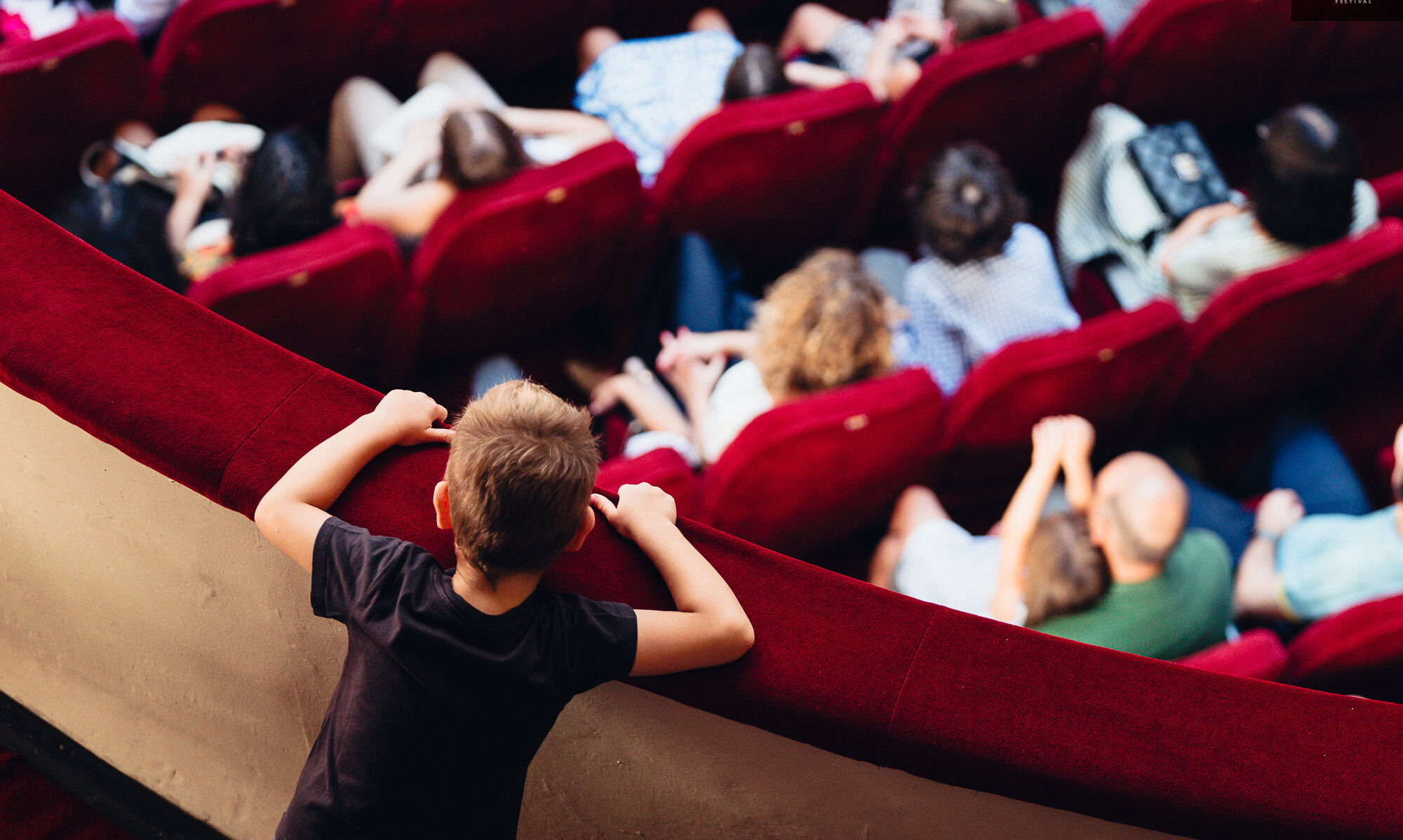
Festival Life creates shared moments of audiences and artists, eye-to-eye
